
Roger Penrose : Nobel Winner of 2020
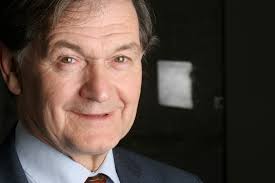
Roger Penrose : Nobel Winner of 2020
Roger Penrose, British mathematician and theoretical physicist , is famous for his contributions to the study of black holes, among many others. For his work on black holes, he was awarded the 2020 Nobel Prize for Physics. He shared the prize with American astronomer Andrea Ghez and German astronomer Reinhard Genzel.
Roger Penrose in his path breaking studies in theoretical physics produced the mathematics in the 1960s that showed how stars collapse to form black holes. With Stephen Hawking, he showed that if Albert Einstein’s general theory of relativity is correct, then there would be a singularity, a point of infinite density and space-time curvature, where time has a beginning. Penrose shared the Wolf Prize for physics with Stephen Hawking for this work on the Penrose-Hawking singularity theorems.
Penrose is also known as the founding father of quantum gravity through his work on twistor theory, which addresses the geometry of space-time. He is an emeritus professor of mathematics at the University of Oxford, and the author of several books about the nature of space, time and reality.
Roger Penrose was born on August 8, 1931, in Colchester, England as son of Margaret (Leathes) and psychiatrist and geneticist Lionel Penrose. His paternal grandparents were J. Doyle Penrose, an Irish-born artist, and The Hon. Elizabeth Josephine Peckover. His maternal grandparents were physiologist John Beresford Leathes and his wife, Sonia Marie Natanson, of Jewish Russian origin.
In 1939, Roger’s father took the family to the United States but decided not to return to England immediately as war clouds gathered. Instead, he moved to Ontario in Canada where Roger attended school. In 1945, after the war, the family returned to England. Penrose attended University College School and University College London, where he graduated with First Class Honors in mathematics. He then moved to Cambridge to begin research in algebraic geometry. Penrose was awarded a Ph.D. in mathematics but had become increasingly interested in physics.
In an interview, Penrose said, “My father was a scientist. Both parents were. They both were medically trained. My father became a professor of human genetics, but with a considerable interest in mathematical subjects. He was sort of an amateur mathematician, but with an interest in science generally. My mother also had a definite interest in science. My father really didn't let her practice medicine, though. He found it too threatening, I think. Neither of them was terribly personal, but my mother was much more so. It was very hard to talk to my father about anything personal. We talked about science. We used to go for long walks. He would describe how things grow. It was fascinating. He was certainly a great inspiration to me on the scientific side.”
Studies done by Penrose in the 1960s revolutionized the mathematical tools that we use to analyze the properties of spacetime. In his paper, “Gravitational collapse and space-time singularities,” Penrose explained that if an object such as a dying star implodes beyond a certain point, then nothing can prevent the gravitational field getting so strong as to form some kind of singularity, a geometric point in space where mass is compressed to infinite density and zero volume.
It was in this context of gravitational collapse that the contribution of Penrose was most decisive, starting with his 1969 cosmic censorship conjecture, to the effect that any ensuing singularities would be confined within a well-behaved event horizon surrounding a hidden space-time region, which Princeton physicist John Wheeler referred to as a “black hole,” leaving a visible exterior region with strong but finite curvature, from which some of the gravitational energy may be extractable by what is known as the Penrose process, while accretion of surrounding matter may release further energy that can account for astrophysical phenomena such as quasars.
In 1969, with Stephen Hawking, Penrose proved that all matter within a black hole collapses to a singularity, a geometric point in space where mass is compressed to infinite density and zero volume. Penrose also developed a method of mapping the regions of space-time surrounding a black hole. Such a map, which is called a Penrose diagram, allows one to visualize the effects of gravitation upon an entity approaching a black hole.
Penrose was interested in topology - the mathematics that describes the properties of geometric objects as they are twisted or stretched. He brought this branch of mathematics to shed light on the problem of black holes.
In 2004, Penrose released The Road to Reality: A Complete Guide to the Laws of the Universe, a comprehensive guide to the laws of Physics. The Penrose Interpretation predicts the relationship between quantum mechanics and general relativity, and proposes that a quantum state remains in superposition until the difference of space-time curvature attains a significant level.
While Einstein's general theory of relativity predicts the existence of black holes, Einstein didn't himself believe they really existed. Penrose was the first to prove mathematically, that they are a natural consequence of relativity theory
Penrose has written several books on the connection between fundamental physics and human (or animal) consciousness. In The Emperor’s New Mind (1989), he argues that known laws of physics are inadequate to explain the phenomenon of consciousness. Penrose proposes the characteristics a new physics may have and specifies the requirements for a bridge between classical and quantum mechanics (what he calls correct quantum gravity).
Penrose argues that computers today are unable to have intelligence because they are algorithmically deterministic systems. He argues against the viewpoint that the rational processes of the mind are completely algorithmic and can thus be duplicated by a sufficiently complex computer. This contrasts with supporters of strong artificial intelligence, who contend that thought can be simulated algorithmically. He bases this on claims that consciousness transcends formal logic.
Subsequent to The Emperor’s New Mind , Penrose published two more books, Shadows of the Mind (1994), and The Large, the Small and the Human Mind (1997).
Nobel Prize
The Nobel Prize(2020) for Physics is the crowning achievement for Roger Penrose who already has many awards to his name.
The Nobel Prize Committee recognized Penrose for his use of “ingenious mathematical methods” to prove “black holes are a direct consequence of Albert Einstein’s general theory of relativity.” Einstein did not believe black holes exist, but, in January 1965, ten years after Einstein’s death, Penrose demonstrated they can form. “At their heart, black holes hide a singularity in which all the known laws of nature cease,” according to the prize announcement. The article he wrote explaining his findings “is still regarded as the most important contribution to the general theory of relativity since Einstein.”
When told about the Nobel prize, Penrose said, “It is a huge honor to receive this Prize. In 1964 the existence of Black Holes was not properly appreciated. Since then they have become of increased importance in our understanding of the Universe and I believe this could increase in unexpected ways in the future.”
.png)


