
Aristotle’s Physics is the first known classic of physics. It is a collection of treatises that deal with the principles of natural or moving things,

Aristotle’s Physics is the first known classic of physics. It is a collection of treatises that deal with the principles of natural or moving things,

The Book of Optics (Kitab al-Manazir) is a seven volume treatise by Abu Ali alHasan ibn al-Haytham

De revolutionibus orbium coelestium (On the revolutions of the heavenly spheres), written by Polish astronomer Nicolaus Copernicus (1473–1543)

Kepler’s Astronomia nova provided strong arguments for heliocentrism and contributed valuable insight into the movement of the planets.

Galileo’s Dialogue Concerning the Two Chief World Systems, published in the Italian city of Florence in 1632, is one of the most talked about books

Issac Newton’s Philosophiae Naturalis Principia Mathematica ,known as Principia marks the dawn of modern physics. No other book in physics

Michael Faraday was one of the greatest scientists of the nineteenth century, a pioneer in experimentation in the fields of electricity
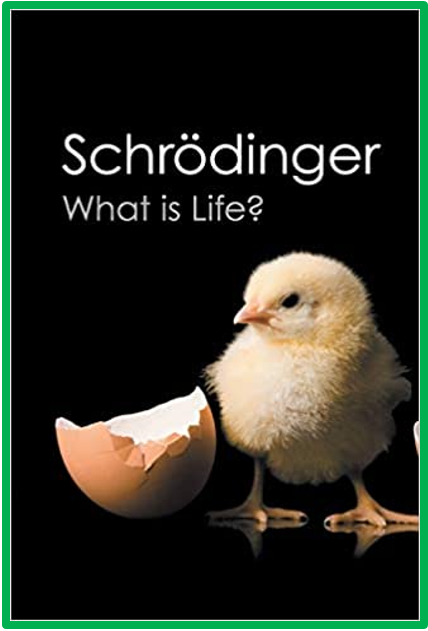
Austrian physicist and Nobel laureate Erwin Schrödinger’s book “What is Life?”(1944) is one of the great science classics of the twentieth century

Thomas Samuel Kuhn (1922–1996) is one of the most influential philosophers of science of the twentieth century, perhaps the most influential.
.png)


